
Updated: June 24, 2026
Here are our favourite running routes near St. Albert, plus Morinville, Barrhead, Westlock, and Gibbons, sorted by distance for every level. We’ve also added physio-backed tips to help you run them without getting hurt. The short version: mixing up your routes and building your distance slowly matters far more than chasing the “perfect” surface or stride. If pain shows up, book a running assessment with our team.
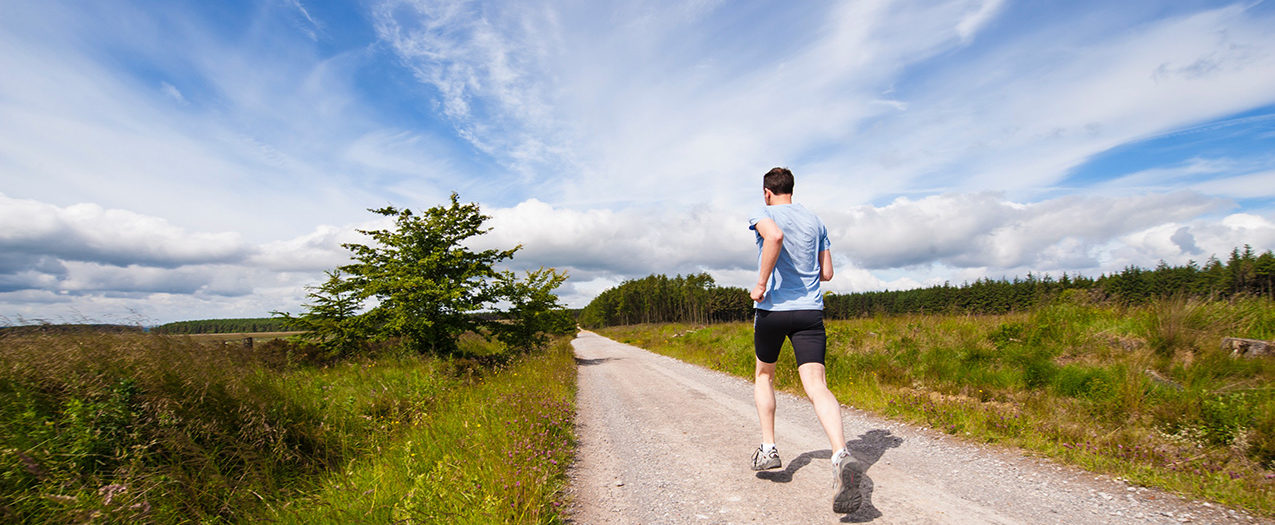
Looking for the best running routes near St. Albert? You’re in luck. Whether you’re a seasoned runner or just starting out, there’s something truly invigorating about running amidst nature. Luckily, if you’re in the St. Albert, Barrhead, Westlock, Gibbons, or Morinville area our team has picked their top running routes in the area. From lush forests to scenic riversides, there are plenty of beautiful trails to explore.
What makes a great running trail?
A good running trail features natural ground like grass or an unpaved path (without too many roots!) as the terrain is varied and no two steps are the same. Although it is tempting to run right out the back door, the problem with running on pavement is that it is a very hard surface. This increases the impact of running on the body, which can eventually lead to injuries. As well, running on pavement lends itself to every step being the same as the step before and this constant repetition without variation can cause injury, pain and inflammation. If you can, run on the grassy areas beside the pavement on these routes, you will be doing your body a favour in the long run.
You might remember a post we did a couple of months ago about the proper running technique, the minimalist approach. Part of what we stressed was that running at a stride frequency of 180 strides/minute is ideal. This cadence promotes a more efficient and injury-resistant running style by encouraging shorter, quicker strides and a mid-foot strike pattern.
If you’re looking for a personalized assessment of your running technique, don’t hesitate to reach out to us for expert guidance!
Our Favourite Running Routes Near St. Albert
River Lot 56 Trail
Choose from two options on this trail: a shorter, rewarding 3.2 km inner loop, or the more extended 6.6 km trail. Both routes offer a great experience.
Lois Hole Provincial Park Wetlands Trail (2.9km)
This route is perfect for those looking for a quick and rewarding run. If you are just starting to develop your running practice, you will be nicely distracted by the sights and sounds of nature on this short but lovely route!
Erin Ridge Ravine and Ted Hole Park Loop (3.2km)
It’s a delightful route, primarily paved, offering splendid views perfect for enjoying nature’s beauty!
Sturgeon River Running Route – Short (3.9km)
Looping around the river, this 3.8 km run in St. Albert is one of our favourites because it’s an easy one to fit into a busy day. You can start wherever is convenient for you!
Forest Park to Red Willow Park via Red Willow Trails (6.3km)
Explore a charming journey along a nicely paved path, meandering through the ravines from Forest Park to Red Willow Park via the Red Willow Trails.
Sturgeon River Running Route – Medium (6.7km)
If you’re looking for something a little bit longer, this route will take you along the Sturgeon River and offers some great bridges and scenery. This is an easy, paved route.
Bellrose River Trail (7.6km)
An open trail that follows the Sturgeon River. The path is paved and has a couple of hills for those looking for a little extra challenge.
Sturgeon River Running Route – Long (10.2km)
Starting on the Sturgeon River, this 10km is perfect for a long run or marathon training.
Red Willow Trail (16km)
Although this trail says it’s 16km, one of the reasons we like it so much is because you are not obligated to do the whole loop. You can park somewhere along the path and only do the partial loop, or cross the river at one of the many bridges and turn back early. This is an easily accessible, multi-use, paved path.
St. Albert Perimeter Trail (23.2km)
For the experienced runner, this is a moderate trail that will give you great views of St. Albert.
Castle Downs/St. Albert Loop (28.5km)
For the experienced runner, this loop offers a mix of paved and gravel trails with scenery that will not disappoint.
If you’re looking to explore some new running routes on your own, we recommend checking out Chickakoo Lake which has multiple trails to choose from.
Our Favourite Morinville/Cardiff Running Routes
Boisvert’s GreenWoods Loop (1.6 km)
Try the 1.6-km loop trail near Sturgeon County, Alberta. It’s perfect for a quick, easy run and open year-round. Plus, it’s dog-friendly if you keep your pup on a leash.
Red Ribbon/Cardiff Park Route (6.9 km)
Enjoy the scenic route along the shoreline, rich in history as a former coal boom town, now featuring recreational areas and connections to the Cardiff Road Trail.
Our Favourite Barrhead Running Routes
Barrhead Running Route (4.4km)
A loop around the town, this route is quick and varied with a moderate ascent of 14 metres to challenge those calves.
Barrhead Blue Heron Route (10.5km)
Explore this 10.5-km loop trail near Barrhead, Alberta, generally considered moderately challenging. Ideal for mountain biking, road biking, and running, it’s unlikely you’ll encounter many others while exploring. Open year-round, it offers scenic beauty at any time, and dogs are welcome but must be leashed.
Our Favourite Westlock Running Routes
Westlock Running Route (3.8km)
This 3.8 Km route has ample grass to run on, as it follows the railway tracks south. Take advantage of the terrain and protect your joints!
Rotary Trail Route (10.2km)
Nestled along the banks of the Westlock Rotary Spirit Centre, Rotary Park boasts beautiful trails that are perfect for runners of all levels. Take in the sights and sounds of the park as you embark on your run.
Our Favourite Gibbons Running Routes
Gibbons Running Route (3.0km)
A short but strenuous 3 Km loop with 21 metres of ascension. This route around Echo Glen Park will keep your heart rate up.
Local St. Albert & Surrounding Area Running Groups
If you are looking for some motivation, and group running is more your thing, Edmonton and St. Albert have many opportunities to join in on a social running club. Here are some that we recommend:
- St. Albert Road Runners & Triathlon Club: This non-profit is made up of St. Albert area residents dedicated to providing beginner and seasoned runners and triathletes with a safe, challenging and fun training environment. Membership required!
- The Running Room Run Club St. Albert (Wednesday 6:00 pm): Runners and walkers of all abilities are welcome to join this social running group that meets twice weekly on a drop-in basis. Everyone is welcome. The larger group is split into several sub-groups according to pace so that no one is intimidated or left behind. A group leader will take you and your squad on a route that is suitable for your abilities. This group is also free!
- Lululemon Run Club Edmonton (Wednesday 6:30 pm): Whether you’re a seasoned marathoner or just starting out, everyone is welcome to be a part of Lululemon’s inclusive Run Collective at the Whyte Ave store.
- Wild Rose Runners Edmonton (Tuesdays 6:30pm): Join weekly group runs in Edmonton rain or shine. Routes range from 5-12 km, with a shorter option available. All levels are welcome, including new members and furry friends.
Upcoming Runs in St. Albert & Surrounding Area
- 5 Peaks (August 9th, 2026)
- Rotary Run For Life (September 13th, 2026)
- Luke’s Legacy Fun Run (September 27th, 2026)
- Run LoSeCa Run (October 18th, 2026)
After Your Run Recovery
After completing your run, take the time to prioritize recovery and self-care with these helpful tips:
- Hydration: Replenish lost fluids by drinking plenty of water after your run. Proper hydration is essential for supporting muscle function and aiding in recovery.
- Stretching: Incorporate gentle stretching exercises to improve flexibility and reduce muscle tension. Focus on major muscle groups such as the hamstrings, quadriceps, calves, and hip flexors.
- Foam Rolling: Use a foam roller to target areas of tightness and release muscle knots. Gentle foam rolling can help alleviate post-run soreness and improve circulation to promote faster recovery.
- Nutrition: Refuel your body with a balanced post-run snack or meal containing carbohydrates and protein. Opt for nutrient-rich foods such as fruits, vegetables, lean proteins, and whole grains to support muscle repair and recovery.
- Rest: Allow your body adequate time to rest and recover between runs. Listen to your body’s cues and prioritize quality sleep to facilitate healing and muscle regeneration.
- Massage Therapy: Consider scheduling a massage to alleviate muscle soreness and promote relaxation. Our experienced therapists at Summit Physiotherapy & Massage Therapy can provide targeted treatments to address your specific needs.
- Injury Prevention: After your body has recovered, take proactive measures to prevent running-related injuries by incorporating strength training, cross-training, and proper footwear into your fitness routine. Our team can offer personalized recommendations with our sports physiotherapy to help you stay injury-free and perform at your best.
What Surface Should You Actually Run On?
It matters far less than you might think. For years runners were told to stay off pavement and stick to grass. But the surface you run on doesn’t have a big effect on your injury risk, so the best surface is simply a mix of them. Variety beats any single “best” choice.
Here’s why. When you run on a hard surface, your body quietly softens its landing. When you run on something soft, it stiffens up. Research summarized by Canadian Running Magazine found hard surfaces were not clearly linked to more injuries, and may even protect against some. Your legs adjust on their own to keep the impact roughly the same no matter what’s underfoot.
So don’t stress about pavement. The bigger win is rotating between paved paths, trails, and grass. Running the same surface every single day is what tends to cause overuse problems, because your body repeats the exact same motion over and over. Lucky for you, the routes above give you plenty of ways to mix it up.
What Are the Most Common Running Injuries?
Most running injuries are overuse injuries, and most happen at or below the knee. Runner’s knee, also called patellofemoral pain syndrome, is the most common one. The good news is that overuse injuries build up slowly, which means you often have time to catch them and change course before they sideline you.
The numbers back this up. Studies suggest about half of runners get injured each year, and more than 80% of those injuries happen below the knee. Runner’s knee alone affects as many as 30% of women and 25% of men who run.
Other common ones include shin splints, Achilles tendon pain, plantar fasciitis, and IT band trouble. A lot of them start as a small niggle you can run through, until you can’t. If you feel a new ache that lingers for more than a few days, don’t ignore it. Pain like pain on top of your foot is often easiest to treat when you deal with it early.
How Do You Start Running Without Getting Hurt?
Build up slowly and avoid big jumps in distance. Most running injuries come from doing too much, too soon. A safe approach is to increase your distance gradually, take rest days, and use a walk-run method when you’re starting out or coming back from a break.
You’ve probably heard the “10% rule,” which says don’t add more than 10% to your weekly distance. It’s a fine starting point, but it isn’t gospel. The bigger danger is one ambitious run. One analysis found that a single run far longer than your recent efforts raises injury risk sharply. So the runner who normally does 3 km and suddenly pushes to 6 km because the legs feel good is taking a real gamble.
If you’re new or returning after time off, a walk-run program is your friend. You alternate short bouts of running with walking, then slowly add more running as your body adapts. It feels easy, and that’s the point. Your muscles, tendons, and bones get stronger when you give them time to keep up.
Running should feel good, not painful. If a nagging ache is holding you back, or you just want to run smarter, our team has helped St. Albert runners for over four decades. Book a running assessment with us and let’s get you moving the way you want to.